

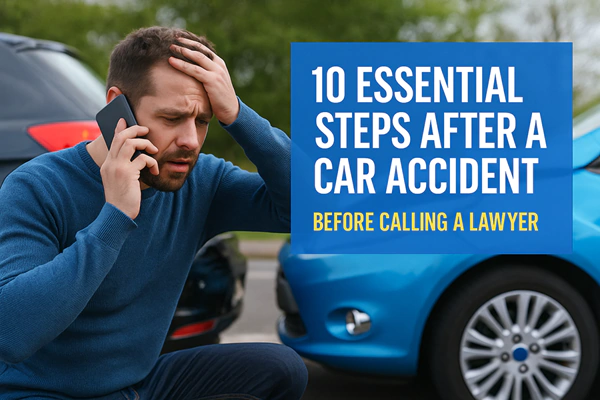
Car accidents are stressful, sudden, and often confusing. Whether you are in the heart of Alresford or travelling through Hampshire’s surrounding roads, knowing what to do immediately after a collision can make a huge difference. The moments that follow a crash can affect your safety, your insurance claim, and even the strength of your potential legal case.
Before you contact a solicitor, there are ten key steps you should take to protect yourself, others involved, and your rights.
1. Check for injuries and get to safety
Your first priority after any collision is safety. Check yourself and any passengers for visible injuries. If anyone appears seriously hurt, do not try to move them unless there is immediate danger, such as a fire. Instead, call 999 straight away for medical assistance.
If it is safe to do so, move to a secure location away from moving traffic. On busy roads near Alresford, such as the A31 or B3047, staying inside your vehicle can be risky if it is blocking the carriageway. Put on your hazard lights and, if possible, stand behind the barrier or on the verge.
2. Call the police if necessary
You are legally required to contact the police after an accident if someone is injured, if a vehicle is causing an obstruction, or if the other driver leaves the scene without exchanging details. Even for minor collisions, it is still worth calling the police non-emergency number (101) so that an official record can be made.
Having a police report can support your insurance claim and provide evidence for your solicitor later. Officers can also ensure the road is safe, speak to witnesses, and gather statements that could prove vital.
3. Remain calm and avoid confrontation
Emotions can run high after an accident. Even if you believe the other driver is at fault, it is important to stay calm. Do not argue or admit blame, as this can complicate matters later when insurers and legal representatives assess the evidence.
Keep your communication polite and factual. Focus on getting the right information rather than discussing who was responsible.
4. Exchange contact and insurance details
The law requires you to exchange your name, address, and vehicle registration with any other drivers involved. You should also swap insurance details. If the other driver refuses or gives incomplete information, make a note of their registration number and report it to the police.
It is helpful to collect extra details such as phone numbers, the make and model of vehicles, and any identifying marks like company logos or business names if it is a commercial vehicle.
5. Gather photographic evidence
Take clear photographs of the scene, including all vehicles involved, number plates, and the surrounding road layout. Capture skid marks, debris, and any traffic signs or lights nearby.
In Alresford, some areas may have limited CCTV coverage, so your photos could be the most reliable evidence available. Try to photograph any visible injuries as well, as these can fade or change within hours.
6. Speak to witnesses
If anyone saw what happened, ask for their name and contact details. Independent witnesses can provide statements that strengthen your claim if there is disagreement about who was at fault.
Even a brief comment from a pedestrian, shop owner, or nearby driver can help clarify the sequence of events. Write down what they say while it is fresh in your mind, or use your phone’s voice recorder if they are willing to give permission.
7. Notify your insurance provider
You should contact your insurer as soon as possible after the accident, ideally within 24 hours. Most policies require prompt notification, even if you do not plan to make a claim.
Provide factual details about the time, place, and nature of the collision. Avoid speculating about fault until all information is clear. Your insurer will guide you through the next steps, such as arranging repairs, assessing damage, and liaising with the other driver’s insurer.
8. Seek medical assessment
Even if you feel fine, it is always worth getting checked by a doctor. Whiplash and soft tissue injuries often develop hours or days later. Visiting your GP or a local walk-in clinic in Alresford ensures that any injuries are documented from the start, which helps both your recovery and any future legal case.
Keep copies of all medical reports, prescriptions, and receipts for related expenses. These documents may be important if you decide to make a personal injury claim.
9. Keep a detailed record
Write down everything you remember about the accident as soon as you can. Include the date, time, weather conditions, the road surface, and anything unusual about the other vehicle’s behaviour.
Keep a file or digital folder with your photos, police reference number, insurance correspondence, and any repair quotes. Keeping this information organised will make it easier for your solicitor to review your case efficiently and build a stronger claim.
If you have to take time off work due to injury or stress, record your lost earnings and any other financial impact.
10. Take time before speaking to insurers or legal teams about settlement
Many people rush to accept early settlement offers from insurers without understanding the long-term consequences. You might not yet know the full extent of your injuries, repair costs, or potential medical needs.
Before you agree to anything in writing, it is wise to seek professional legal advice. A solicitor can assess the offer, ensure you are not under-compensated, and explain what evidence is still required.
When you do contact a lawyer, being well-prepared with accurate details and organised documents will help them act quickly on your behalf.
Taking control after a collision
A car accident can leave you shaken, but following these steps gives you control over the situation. By acting methodically and prioritising your safety and evidence, you lay the foundation for a fair and efficient claim process.
Even minor collisions can lead to long-term effects, whether physical, emotional, or financial. That is why having clear documentation and reliable legal guidance makes all the difference.
If you have been involved in a road accident in or around Alresford and need legal advice, speak with the team at Marley Solicitors. Our experienced road traffic specialists can assess your case, guide you through insurance and medical documentation, and ensure you receive the compensation you deserve. Reach out today to arrange a confidential consultation and let us help you move forward with clarity and confidence.